Robb Ewoldt, a farmer from Davenport, past president of the Iowa Soybean Association and current director on the United Soybean Board (Photo: Iowa Soybean Association / Joclyn Kuboushek)
Iowans spotlight innovation, ROI at Commodity Classic
March 5, 2026 | Kriss Nelson
From the main stage to the trade show floor, Iowans brought home a consistent message from the 30th annual 2026 Commodity Classic in San Antonio: in a tight-margin environment, progress depends on research, technology and smart decision-making.
Driving demand
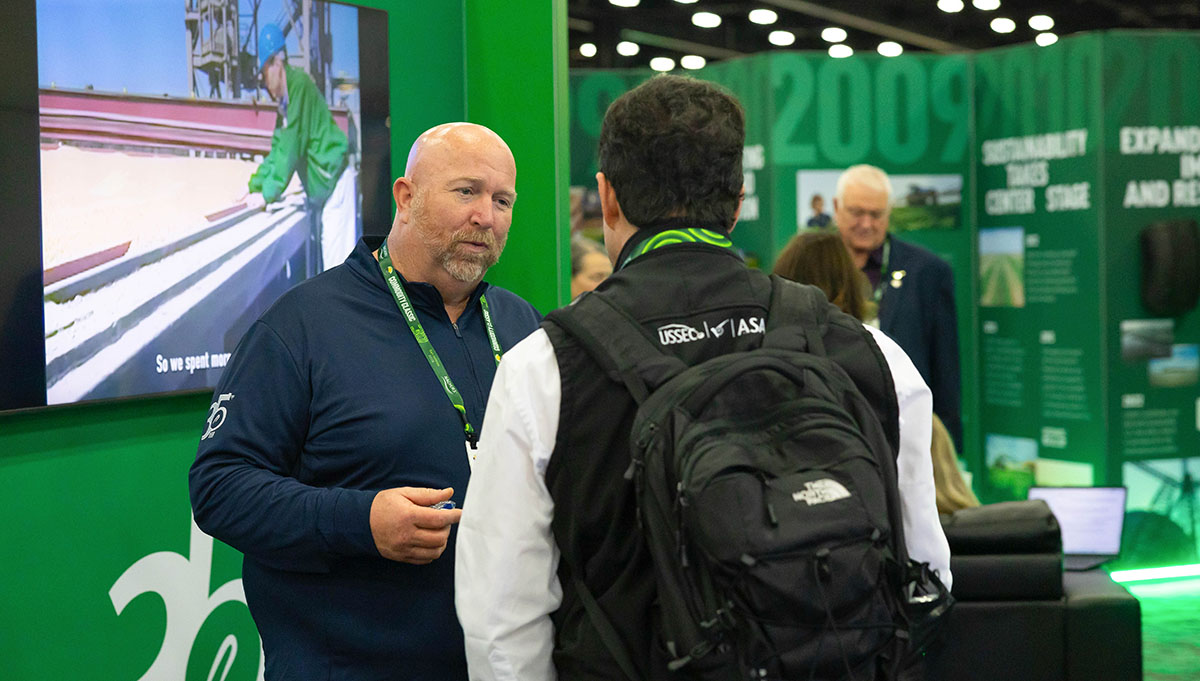
Robb Ewoldt, a farmer from Davenport, past president of the Iowa Soybean Association and current director on the United Soybean Board (USB), represented Iowa farmers on the Commodity Classic main stage, highlighting how soybean checkoff investments are driving demand through animal nutrition research.
Ewoldt spoke about the U.S. Center for Animal Nutrition and Health's work and how checkoff dollars are advancing research on soybean meal inclusion rates in livestock diets. Specifically, research shows positive benefits in increasing soybean meal in swine diets.
That research is showing promising results, particularly in herd health.
“We’re seeing a lot of positive numbers, especially when it comes to respiratory health,” Ewoldt says. “As a hog farmer, that’s something we deal with regularly. Soybean meal replacing some additives and synthetic ingredients is showing real health benefits in those herds.”
Ewoldt also shared his enthusiasm for high oleic soybeans and their growing potential in dairy rations. Research shows benefits in butterfat content within days of inclusion.
“In dairy herds, we’re seeing improvements in butterfat in as little as three days,” he says. “That’s exciting.”
With approximately 9 million dairy cows nationwide, Ewoldt noted expanded use of high oleic soybeans could significantly increase demand.
“If we could get 6 million of those cows eating high oleic, that’s potentially 6 million acres of high oleic soybeans,” he says. “That’s demand we don’t have to go searching for.”
While market conditions remain challenging, Ewoldt said demand-building efforts remain critical.
“There’s a bright spot, but we know there’s more work to do to help soybean farmers,” he says.
Shortening the curve
Kelley Garrett, co-founder and owner of XtremeAg and a farmer from Arion, came to Commodity Classic to help farmers navigate a challenging economic environment.
Garrett says XtremeAg was built around one core mission, helping farmers shorten the learning curve. Through on-farm trials across multiple states, including several in Iowa, Garrett and his team test progressive, cutting-edge practices and products to determine what works and what does not.

“We conduct the trials so farmers don’t have to,” Garrett says. “Our goal is to help improve ROI by sharing real results from real farms.”
Garrett addressed the growing conversation around conservation and potential regulation. Rather than choosing one or the other, he describes it differently.
“I call it farming in tune with Mother Nature,” he says. “I want to see what the soil provides first, then supplement to help the crop reach its potential.”
That mindset has led him toward regenerative practices, though he emphasizes that regeneration itself is not the end goal. Profitability is.
“I really believe the science is leading us down a more sustainable, regenerative path,” Garrett says.
“But for me, it’s about farming in tune with Mother Nature because that’s the best way to achieve ROI.”
During his time on stage at Commodity Classic, Garrett also spoke about resilience in farming.
“If you’re standing still, you’re falling behind,” he says. “Continue the research on your farm. Continue to learn. Continue to adapt. And live within your means.”
Technology payback
Justin Hammes, a farmer from Batavia, joined a Commodity Classic panel focused on tech-driven solutions, sharing his farm’s experience with John Deere’s See & Spray, Harvest Automation and Operations Center tools.
For Hammes, adopting See & Spray during the 2025 growing season was initially a financial decision, though he admits he was hesitant.
“We didn’t want to use it at first because we didn’t want to pay for it,” Hammes says. “But once we started using it, we couldn’t see going without it.”
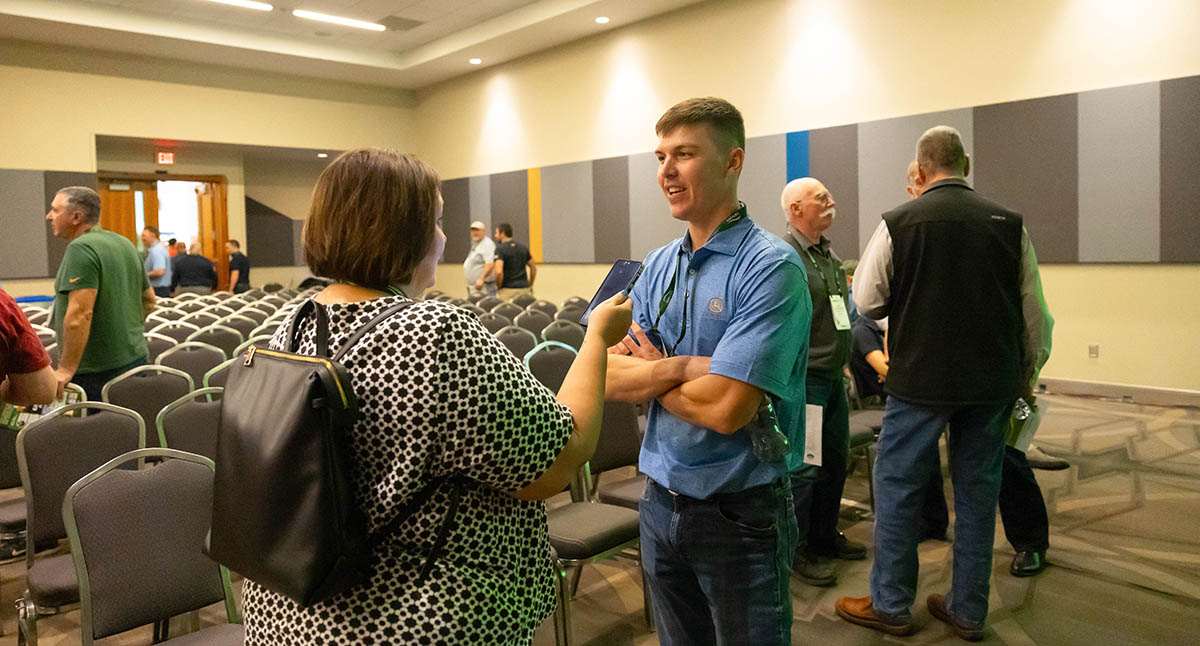
See & Spray uses advanced camera vision and machine learning to target individual weeds, reducing overall herbicide use. Hammes said the turning point came when he watched the system in real time on the cab monitor.
“When you can actually see the cameras picking up the weeds, that’s when you start believing,” he says. “You think, ‘There’s no way it’s going to pull it off.’ But once you get comfortable with it, it just works.”
The Hammes farm used the technology on soybeans and some corn acres, initially applying a wider band around field edges where weed pressure tends to be greatest before switching to targeted spraying in the interior of the field.
“We probably checked fields more than we normally would, just to make sure nothing got away,” Hammes says. “And if something did, you could go back and just hit what needed to be hit instead of spraying the whole field.”
Harvest Automation, which automatically adjusts combine speed based on crop volume, was initially intimidating but quickly became indispensable.
“The first day you run it, you’re just like, ‘wow,’ ” Hammes says. “It’s like cruise control for harvest.”
He noted operators often do not realize how inconsistent speed can be throughout the day, whether answering a phone call or adjusting settings, and that variability impacts efficiency.
“With automation, it’s just so consistent,” he says. “You didn’t think you were going to be that much more efficient, but you are.”
On rolling ground with terraces, automation also helped manage constant adjustments to fan speeds and cleaning systems, changes that would be difficult to maintain manually all day long.
“It’s like vacuum automation on a planter,” Hammes says. “You don’t realize how much conditions change during the day until the system adjusts for you.”
Beyond equipment in the field, Hammes said the Operations Center has improved logistics during harvest. The farm tracks semis and pickup trucks and uses machine data to monitor performance in real time.
“It’s been really helpful for us,” he says.
While tighter margins may make farmers hesitant to invest in new technology, Hammes explained the conversation should focus on long-term efficiency.
“When times are tight, you’re trying to figure out what’s going to save you money in the long run,” he says. “Efficiency is everything.”
Traveling from Iowa to San Antonio to share his story with thousands of farmers, Hammes said the goal was simple: help others who may be skeptical, just as he once was.
“At first, it was hard to get going with some of these tools,” he said. “Now we look at it and don’t think we could go without it.”
Innovation at home
Ag Leader Technology, a global precision agriculture company headquartered in Ames, brought its innovation story to Commodity Classic, reinforcing its long-standing commitment to helping farmers improve efficiency through data and technology.
Laurie Bedord, marketing communications manager for Ag Leader, says the company values the opportunity to connect directly with farmers.
“We’ve been around for more than 30 years, but we still want to make sure farmers know we’re out there and continuing to innovate,” Bedord says.
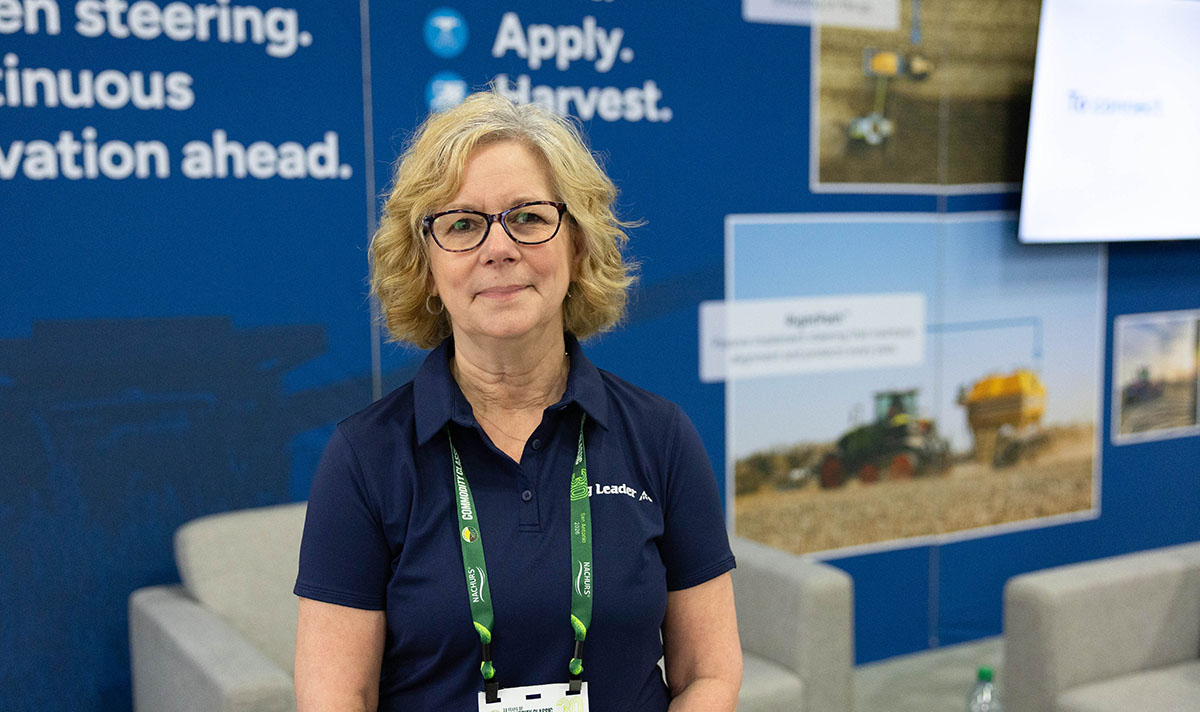
Ag Leader introduced the first commercially successful yield monitor in 1992 and has continued building precision tools designed to help farmers make more informed decisions. Bedord said Commodity Classic remains one of the premier venues to showcase that progress.
“This is the place for innovation,” she says. “There are so many great companies here, and we want to be part of that conversation about digital agriculture and what precision farming can deliver.”
One of the featured technologies at this year’s show was RightPath, a new machine guidance feature that provides implement steering to ensure equipment stays precisely on line.
“Implements can tend to drift,” Bedord says. “We want to make sure they’re exactly where they need to be.”
The goal, she said, is to introduce tools that help farmers do their jobs better by increasing accuracy and consistency in the field.
With margins tight and crop prices under pressure, Bedord acknowledged that many farmers are hesitant to invest in new technology. However, she says precision upgrades can be one of the most practical ways to improve efficiency.
“Most farmers already have the equipment,” she said. “Upgrading what you already own and are comfortable with to make it more efficient and productive can make a real difference.”
In challenging economic times, Bedord notes precision agriculture remains a strategic investment.
“Precision technology is one of the areas where you can truly impact efficiency,” she says. “That’s where farmers can see measurable returns.”
Written by Kriss Nelson.
Back