
(Photo: Iowa Soybean Association / Joclyn Kuboushek)
Investing in infrastructure from farm to port
May 1, 2026 | Bethany Baratta
The Soy Transportation Coalition (STC) understands there’s value in every bushel of soybeans moved from the farm. That’s why it works to improve the infrastructure by which the bushels are moved throughout the state and to customers around the world.
“When you invest in our roads, our bridges, our inland waterway system, our freight rail system, our ports, 100 percent of the beneficiaries of that are U.S. agriculture,” says Mike Steenhoek, STC’s executive director.
When you think about costs of running a business as a pie chart, one sliver of that pie includes transportation costs. The goal, Steenhoek says, is to invest in the infrastructure to make U.S. soybean products competitively priced from a transportation cost standpoint.
“It’s a game that’s won or lost based on price. So, any time you make that investment, you’re helping reduce the cost per ton or per bushel of that product,” he says.
Vehicles to invest in infrastructure exist through the Infrastructure Investment and Jobs Act, including the Surface Transportation Reauthorization Act, and the Water Resources Development Act (WRDA), but it’s about better stewardship of the dollars invested, and avoiding instances of 300% cost overruns on projects.
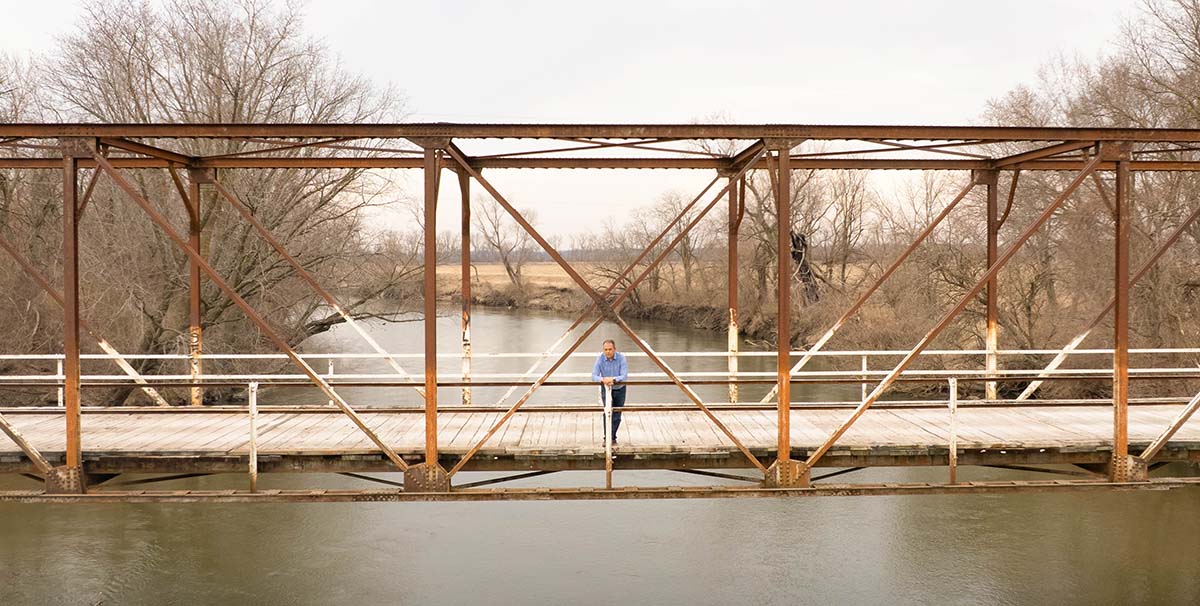
“It’s not just a matter of the government spending more money,” Steenhoek says. “We have to be able to institute more appropriate construction practices.”
And that’s why the Soy Transportation Coalition, comprised of 14 state soybean boards, the American Soybean Association, and the United Soybean Board, is focused on projects in a wide range of scope and scale. From increasing weight limits permitted on highways to expanding capacity of our locks and dams and supporting rail projects that remove log jams to get soy from Iowa farms to customers around the world, it all plays into the competitive advantage — and cost efficiency — of soy transportation.
Steenhoek has long acknowledged the shift in market dynamics, especially as it relates to Brazil’s ability to supply China with its bulk soy supplies. The seemingly endless conveyor belt that once fed China’s insatiable appetite for U.S. soy has changed.
“The landscape has changed; you’ve got to have a supply chain that can adapt to it,” Steenhoek says.
Moving soybean meal domestically and abroad has been in the spotlight as meal supplies dominate the U.S. soybean market.
Projects that STC has invested in
Here are a few of the projects that STC has invested dollars to help underwrite engineering, permitting, project management, and construction support:
Port of Houston
The Andersons, Inc., is expanding its grain export terminal at the Port of Houston (in Houston, Texas) to handle and export soybean meal and soybeans from the facility. Once completed, the expansion will result in one million metric tons of soybean meal and soybeans being exported from the facility.
TEMCO project at Port of Kalama
The Port of Kalama (in Kalama, Washington) and Tacoma Export Marketing Company (TEMCO), a joint venture by Cargill and CHS, are continuing efforts to expand rail efficiency in the Pacific Northwest. The facility, located in a strategic export region for U.S. soybeans and soy products, is undergoing construction enhancements to expedite terminal unloading and staging. According to Steenhoek, expanding rail lines will increase efficiency by 25 to 30%, especially during the key export window for U.S. soybeans.
Portsmouth Agricultural Intermodal Export Facility
The DeLong Co., Inc., celebrated the groundbreaking of a new Portsmouth Agricultural Intermodal Export Facility on May 2025. Located in Portsmouth, Virginia, the facility will be the first on the East Coast capable of receiving unit trains and transloading agricultural products directly into export containers.
This facility will offer 15,000 metric tons of storage and will handle 15,000–20,000 containers annually, significantly boosting the region's ag export capabilities. Whole grains and feedstuffs — including soybeans, corn, wheat, distillers grains and soybean meal — sourced from local producers and the Midwest will be received by truck and rail, then shipped overseas via the Port of Virginia.
Port of Milwaukee
Primarily used to export DDGs to international markets via the Great Lakes/St. Lawrence Seaway, The DeLong Co., Inc., is expanding at the Port of Milwaukee in order to enhance its capacity to export soybean meal. The project involves the construction of two grain storage silos, electrical service upgrades, and additional handling equipment. The expansion of grain storage capacity for staging inbound and outbound grain by over 1.3 million bushels will improve soy transportation efficiency. The grain handling equipment will expedite the movement of grains through the Great Lakes/St. Lawrence Seaway to international markets in Europe, North Africa, and other regions. The new facility will allow the port to handle two commodities simultaneously.
Written by Bethany Baratta.
Back